Showing posts with label Education. Show all posts

Wednesday, June 13, 2012

Books we enjoyed this Year!

 "Basket Moon" by Mary Lyn Ray

"The Mixed Up Chameleon" by Eric Carle 

"Winter in Songming" by Page McBrier 

 "Lewis and Clark and Me: A Dog's Tale" by Laurie Myers

 "The young Birder's Guide" by Bill Thompson III

  "50 Nature Projects for kids" by Cecilia Fitzsimons 

"The Giving Tree" by Shel Silverstein

 "The Magic Tree house Series" by Mary Pope Osborne

 "Who Conducted the Underground Railroad and Other Questions About the Path to Freedom" by Peter and Connie Roop 

 "The Random House Book of Poetry for Children" by Jack Prelutsky and Arnold Lobel

 "The boxcar children books" by Gertrude Chandler Warner

 "Handbook of Nature Study" by Anna Botsford Comstock

 "Birdhouse for Rent" by Harriet Ziefert 

"Charlotte's Web" by E.B.White 

We loved each of these books! We read many more but these we're our favorites! Check them out, and share your favorites with us!

Tuesday, June 5, 2012

What is Narration?

  Charlotte Mason's methods for one's language art skills were/are learned through narration, which consists of the child telling back a story, first orally, through picture drawings and later in written form; copywork, or the transcribing of a piece of literature. This method is done by keeping the child engaged through the use of thought provoking open-ended questions as the story progresses during a read aloud language lesson. 
Take time to pause and ask the child to re-tell what has happened so far or what they believe will happen next. Who is you favorite character so far? Would you have done the same as "so and so"? Tell me what has happened so far.  In doing so the child begins to from his or her own relationship with the characters and deeper connection to the story that is being told.  
This is also the perfect opportunity for vocabulary expansion. If you come across a new word in the text, take the time to either look up it's meaning or tell your child what it means and again have them re-tell it's meaning to you in their own words.


 Direct questions on the subject-matter of what a child has read are always a mistake. Let him narrate what he has read, or some part of it. He enjoys this sort of consecutive reproduction, but abominates every question in the nature of a riddle.
(Vol. 1 Part VIII--Reading for Older Children, p.228)


 As knowledge is not assimilated until it is reproduced, children should "tell back" after a single reading or hearing: or should write on some part of what they have read.
(Vol. 6, Chapter 10 The Curriculum, p. 155)


http://charlottemasoneducation.com/narration.html

Wednesday, May 30, 2012

Hands-On Water Exploration

Science and Math Concepts made fun!

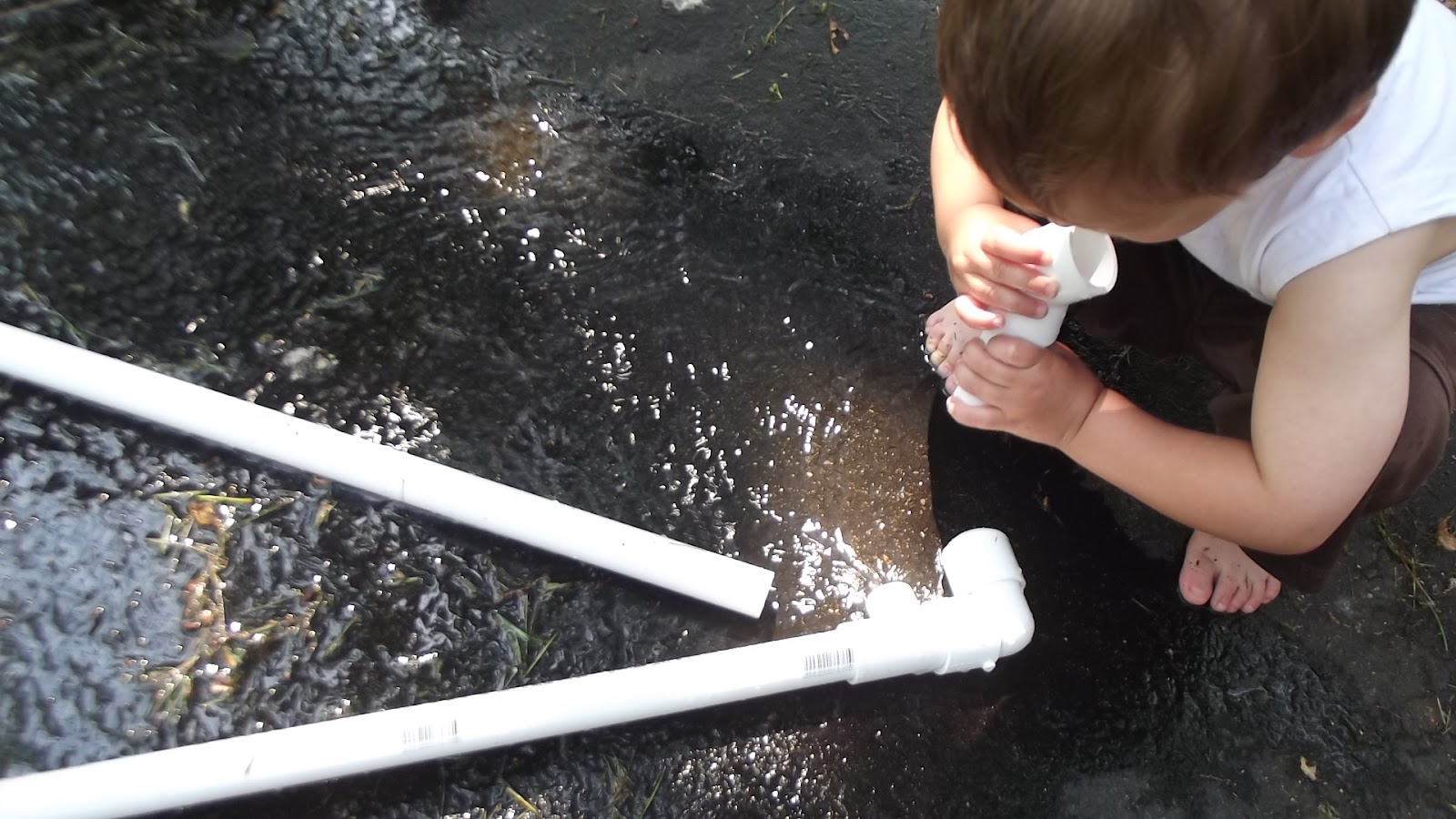
Water is used in our lives everyday, in one way or another. This exploration in particular helped with the development of basic math and science skills, such as questioning, sizing,volume, investigating, questioning, discussing, and formulating ideas. 
When the pieces were first laid out it looked easy to put together, but upon further implementation it was discovered- it's not that simple!
Once a few of the pipes were connected, the conversation with my older son turned to a discussion on concepts related to the water's flow, appearance, and effects within the pipes. What makes it flow one way or the other? How can we make it go this way instead of that? What is water pressure and how does it change?


This water exploration also gave my toddler a chance to work on important motor skills. Whether it was working on his Fine Motor skills by piecing the parts together or his Gross Motor skills by jumping over the pieces on the ground.  He could persist until he got it right, feeling that sense of accomplishment.  He not only built upon his already existing skills, but worked and built upon his relationships with the world and how it works and engaged in cooperative play along the way!
 It's all about the journey and fostering new discoveries along the way! So, get creative, ask open-ended questions and watch as new investigations and explorations lead to new found information.

"Hands-on learning involves the child in a total learning experience which enhances the child's ability to think critically. The child must plan a process to test a hypothesis, put the process into motion using various hands-on materials, see the process to completion, and then be able to explain the attained results." -http://www.ncrel.org

Thursday, May 24, 2012

My Favorite Charlotte Mason Quotes

  • All beautiful and noble possibilities are present in everyone.
  •  Great artists, whether they be poets or painters, builders or musicians, have the power of expressing and showing to the rest of us some part of the wonderful visions Imagination has revealed to them. But the reason why we enjoy their pictures, their poems, or their tales, is because Imagination does the same sort of thing for all of us, if in a less degree.
  •  “Thought breeds thought; children familiar with great thoughts take as naturally to thinking for themselves as the well-nourished body takes to growing; and we must bear in mind that growth, physical, intellectual, moral, spiritual, is the sole end of education.”
    Charlotte Mason, The Original Home Schooling Series by Charlotte Mason 
  •  “If mothers could learn to do for themselves what they do for their children when these are overdone, we should have happier households. Let the mother go out to play!                                                                                                       
    Charlotte Mason
  •  “...my object is to show that the chief function of the child--his business in the world during the first six or seven years of his life--is to find out all he can, about whatever comes under his notice, by means of his five senses...”

  •  “Let children alone... the education of habit is successful in so far as it enables the mother to let her children alone, not teasing them with perpetual commands and directions - a running fire of Do and Don’t ; but letting them go their own way and grow, having first secured that they will go the right way and grow to fruitful purpose.”
    Charlotte Mason

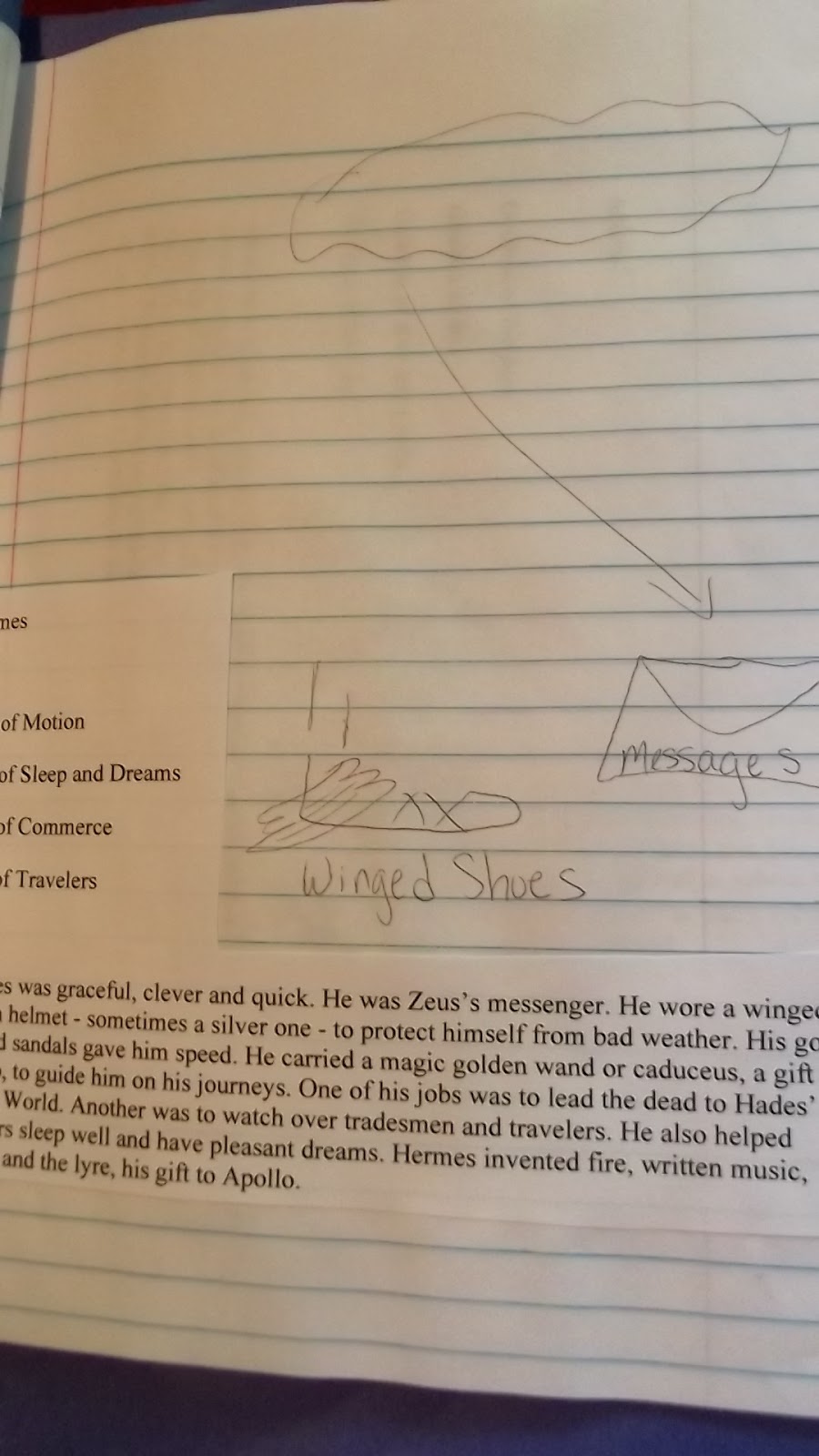
Journal Pages- examples in Various Subjects


Examples of journal entries:
Downy Woodpeckers
Greek Gods
Daffodil Disection
A Robin Study Booklet


Saturday, May 19, 2012

Study of Ancient China


 Art inspired by Chinese Artists

We used chop sticks to both, pick out informational facts to read and discuss, and to each lunch!